Digital Marketing vs Traditional Marketing in Real Estate: Which Wins?
Introduction
Real estate has never been only about good locations or attractive buildings. Visibility plays a huge role. A property can be well designed and fairly priced, yet struggle to sell if the right people never hear about it. Anyone who has worked Digital Marketing vs Traditional Marketing in real estate knows this. Digital Marketing vs Traditional Marketing often decides how fast a project moves, not just how good it looks on paper.
For a long time, promotion meant newspapers, roadside boards, pamphlets, and word of mouth. Builders relied on local visibility, and agents depended on personal networks. That approach worked because buyers discovered projects in the same way — offline, slowly, and through limited sources.
Things don’t work that way anymore.
Most buyers today don’t start by calling an agent or visiting a site. They start quietly. They search online, browse listings, watch short videos, compare prices across platforms, and read comments or reviews. By the time they finally speak to someone, they already have a shortlist in mind. This change has forced real estate businesses to rethink how they promote projects — and whether old methods still deliver results.
How Traditional Marketing Actually Works on the Ground
Offline promotion is still familiar territory for many Digital Marketing vs Traditional Marketing in real estate businesses. Newspaper ads, hoardings, brochures, exhibitions, and cold calls are methods that most builders and agents have used at some point.
These methods helped establish visibility, especially in local markets. Seeing a project board every day or reading about a builder in the newspaper slowly builds recognition. For people who prefer physical presence, this kind of exposure still creates comfort.
But offline Digital Marketing vs Traditional Marketing also comes with limits that are hard to ignore today.
Once money is spent on a newspaper ad or a hoarding, there’s no going back. If the response is poor, you can’t change the message or pause the campaign. And when calls do come in, it’s often unclear what actually triggered them. Was it the ad? Was it a referral? Or was it just timing?
Many enquiries from offline promotions are casual. People ask for prices, locations, or brochures and then disappear. Following up takes time, and separating serious buyers from general curiosity becomes part of the daily routine.
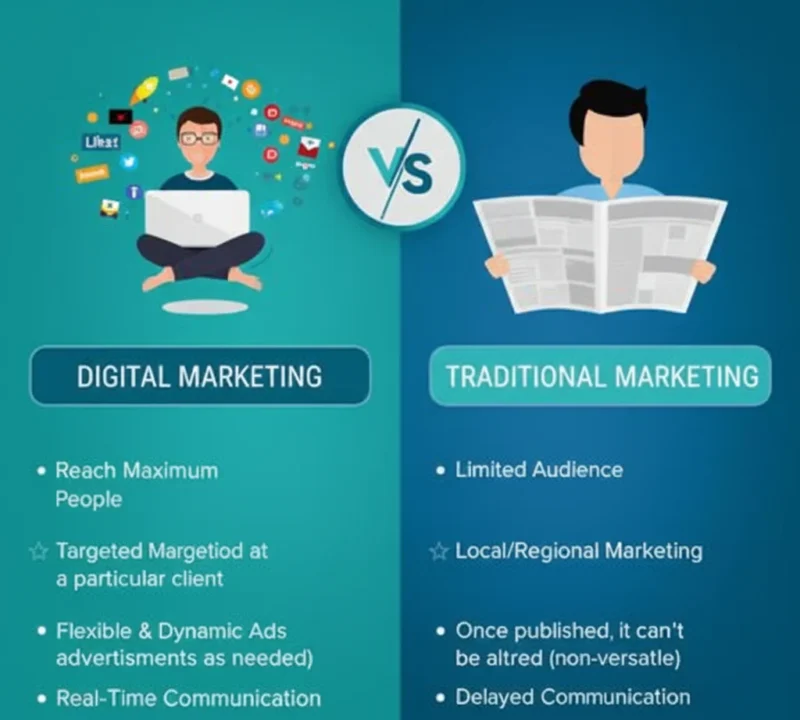
How Digital Marketing Feels Different in Practice
Online promotion works in a very different way. Instead of broadcasting to everyone, it reaches people who are already looking. That changes the quality of conversations from the start.
Digital marketing doesn’t require big commitments upfront. You can start small, watch how people respond, and adjust as you go. If something doesn’t work, you stop it. If something suddenly gets attention, you push it further. That level of control simply doesn’t exist offline.
Another noticeable difference is clarity. Patterns begin to show. Some ads bring enquiries, others don’t. Over time, it becomes easier to understand what people respond to, instead of relying only on instinct or experience.
Reach: Who Actually Sees the Message?
Offline ads are visible to everyone, but that’s not always a benefit. A newspaper ad is seen by many people who have no intention of buying property. It creates awareness, but much of that visibility doesn’t translate into real action.
Online promotion quietly reaches a narrower group — people who are already browsing, comparing, and searching. Not everyone reaches out immediately, but these people are usually further along than someone who noticed a hoarding while driving past.
Lead Quality: The Nature of Enquiries
Anyone handling offline enquiries knows the pattern. Many calls are early-stage conversations. Some are just price checks. Others are information seekers who may return months later, or not at all.
Online enquiries usually come with clearer intent. Someone filling a form or searching for a specific type of property has already spent time researching. Not every lead converts, but conversations tend to be more focused and purposeful.
Tracking Results: Guesswork vs Clarity
Offline promotions don’t leave much of a trail. Online, you still don’t get perfect answers, but you have a better idea of what’s pulling people in. You start noticing trends — which messages attract attention, which ones don’t, and when interest drops. That visibility makes decisions less emotional and more practical.
So, Which One Really Wins Digital Marketing vs Traditional Marketing?
Digital marketing clearly fits how buyers behave today. It offers flexibility, control, and clearer feedback. Traditional marketing still has a place, especially for local presence and familiarity, but it no longer works well on its own.
The most effective real estate Digital Marketing vs Traditional Marketing today isn’t about choosing one side. It’s about understanding where buyers actually spend their time — and meeting them there.
Speed and Flexibility
Traditional Marketing Speed
Putting together offline campaigns takes forever. There’s printing, approvals, vendors… all sorts of stuff. And once it’s up, you can’t really fix it without spending more money. Once it’s out there, making changes is hard and expensive.
Digital Marketing Speed
Online marketing is a lot faster. You can start a campaign in a few hours, even the same day. If something isn’t getting attention, you can tweak it immediately, change pictures, adjust who sees it, or try a different message. That kind of flexibility is really useful when things move fast in the market.
Brand Building and Trust Factor
Trust in Traditional Marketing
Offline ads still make a difference when it comes to trust. Seeing a board or sign makes the project feel real. If you live nearby, it’s nice to have something you can actually see or touch. It just feels more real.
Trust in Digital Marketing
Online marketing builds trust differently. Folks read reviews, watch videos, peek at social posts, or go through project info before they feel confident. People like being able to check everything online — it makes the project feel more transparent.
Which Marketing Strategy Works Better for Real Estate in 2026 Digital Marketing vs Traditional Marketing?
These days, most buyers start online. They want prices, images, videos, reviews — all in one place. That’s why digital marketing has a big edge.
But offline methods haven’t gone away completely. They still help for local branding, premium projects, or big launches. Luxury properties and regional developments often get a boost from physical visibility.
The Best Approach: Use Both(Digital Marketing vs Traditional Marketing) Together
The brands that do best usually don’t pick one over the other. They use both.
- Online marketing gets people reaching out and asking questions.
- Offline marketing keeps the brand visible and trusted.
Together, they work better than either one alone.
Final Verdict: Which One Wins Digital Marketing vs Traditional Marketing ?
If you compare Digital Marketing vs Traditional Marketing side by side, digital clearly wins on cost, targeting, lead quality, and tracking results.
Traditional methods are still useful for awareness and credibility, but the Digital Marketing vs Traditional Marketing is going digital-first.
Digital Marketing vs Traditional Marketing in Real estate businesses that follow this shift and mix online with offline smartly will stay competitive and successful.
FAQs : Digital Marketing vs Traditional Marketing
1. Do offline ads still work?
Yeah, they do. People still notice hoardings and newspaper mentions. It’s more about being seen around town and building trust. You won’t get instant leads, but it helps.
2. Can I drop traditional marketing entirely?
Honestly, you can try, but I wouldn’t. Offline ads support what you’re doing online. They make your brand feel real, especially for people who like seeing something physical.
3. How do I know which one works better?
Look at where your enquiries come from. If more people are filling forms online, that’s a sign digital works. If people are visiting after seeing your board or brochure, offline still has an effect. It’s messy, but patterns show over time.
4. Are online leads better?
Often, yes, but not always. People who fill online forms usually know what they want. Offline leads might just be browsing or asking random questions. You have to filter them anyway.
5. Does online marketing cost less?
It can, because you can start small. You can stop ads that don’t work or put more money where it’s getting results. Offline ads? Money’s gone once it’s printed or put up.
6. Is tracking really that important?
For online campaigns, yes. You can see clicks, form fills, and which posts work. Offline? You mostly guess — like, “Did this ad bring in the lead?” You never know exactly.
7. Should I mix both methods?
I’d say yes. Digital finds buyers online, offline gives your project some street presence. Together, they work better than either alone.
8. How do I pick where to focus?
Depends on your buyers. Younger, online-savvy buyers? Go digital. Locals who want to see things in person? Throw in a hoarding or brochure. It’s never one-size-fits-all.
Want more ideas on Digital Marketing vs Traditional Marketing in real estate promotion? Check out our guide on digital marketing strategies for real estate in 2026.