Digital Marketing Trends That Will Dominate in 2026
Introduction
If you had asked someone five years ago what Digital Marketing Trends in 2026 would look like today, most answers would have been wrong. Back then, people thought running ads and posting on social media was enough. Now, audiences are tired, attention spans are shorter, and trust is harder to earn.
As we move into 2026, Digital Marketing Trends in 2026 feels less like a set of tools and more like a moving conversation between brands and people. Buyers are smarter. They compare, question, and research everything. They don’t want to be sold to — they want to understand before they decide.
This blog isn’t about trends you’ll hear on every webinar. It’s about what’s actually changing on the ground and how marketing is quietly shifting direction.
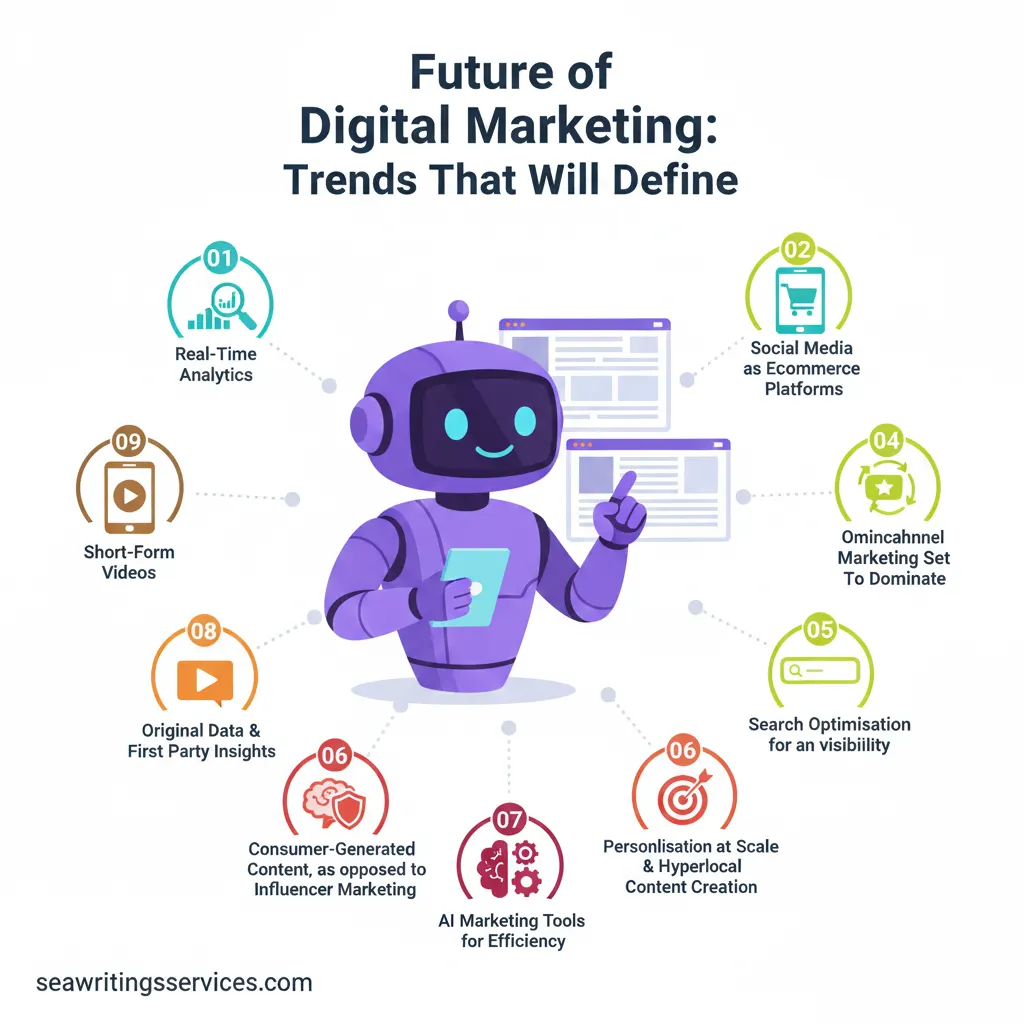
Digital Marketing Is Becoming Less “Marketing”
One of the biggest changes in 2026 is that good Digital Marketing Trends in 2026 doesn’t look like marketing anymore.
People scroll past ads without even noticing them. What they stop for is content that feels useful, familiar, or honest. A short video explaining something clearly can outperform a high-budget campaign. A detailed blog written from experience can build more trust than a polished landing page.
Brands that keep pushing loud promotions are losing attention. The ones that explain, guide, and educate are winning quietly.
AI Is Everywhere, but People Can Tell
Yes, AI tools are everywhere now. Everyone uses them. Marketers, writers, designers, even small business owners.
But here’s the thing people don’t talk about enough: users can feel AI-written content instantly.
In 2026, AI won’t be impressive. It’ll be expected. What will stand out is how brands edit and humanize AI output. Raw AI content feels flat. It answers questions but doesn’t sound lived-in.
The marketers who do well will use AI like a rough notebook — not a final voice.
Short Videos Are Replacing Long Explanations
People don’t read instructions anymore. They watch them.
Instead of reading a full product description, users want:
- a 30-second walkthrough
- a quick demo
- a real person explaining one thing clearly
In 2026, short videos won’t just be for entertainment. They’ll be how people learn, compare, and decide. Even serious industries like finance, education, and real estate are leaning into this.
The key difference now is tone. Perfect lighting doesn’t matter. Clear explanation does.
Trust Is Built in Pieces, Not One Campaign
Trust doesn’t come from one ad or one post anymore.
It builds slowly through:
- reviews that don’t sound scripted
- videos that show flaws as well as strengths
- content that answers uncomfortable questions
- brands that admit limitations
In 2026, people don’t trust brands that claim perfection. They trust brands that sound real.
Search Is No Longer Just Google
People still use Google, but it’s not the only place they look.
Some search on YouTube because they want to see.
Some search on Instagram because they want opinions.
Some ask AI tools because they want quick summaries.
That means Digital Marketing Trends in 2026 strategies can’t depend on one platform. Content needs to exist in different formats, even if the core message is the same.
Personalization Without Being Creepy
Personalization has matured.
In the past, it felt invasive. Ads followed people everywhere. At times, the emails crossed a line and started feeling too targeted.
Personalization isn’t the problem anymore. It’s how obvious it is. When it quietly suggests something useful or reminds you at the right time, people are okay with it. When it starts feeling too personal, that’s when it gets uncomfortable.
Influencers Feel Smaller and More Local
Big influencers still exist, but they don’t drive decisions the way they used to.
When a smaller creator recommends something, it usually doesn’t feel forced. It sounds like someone sharing what worked for them. That’s why people pay attention. More brands are noticing that trust beats numbers almost every time.
Content Is Slower, Deeper, and More Honest
The rush to publish daily content is fading.
Now, brands are:
- writing fewer blogs
- but making them more detailed
- updating old content instead of chasing new topics
- focusing on real questions people ask
This shift favors patience. Quick wins are rare. Long-term trust is everything.
Data Matters, but Guesswork Is Reducing
Marketers no longer rely on gut feeling alone.
Analytics tools in 2026 are clearer and easier to understand. It’s easier to tell what people read, where they stop, and what pushes them to enquire. What’s changed is that you can do something with that information. Brands are finally using the data instead of just collecting it.
Selling Happens Later Than It Used To
People don’t buy immediately anymore.
They:
- read first
- watch videos
- compare options
- come back later
People take time to decide now, and Digital Marketing Trends in 2026 has adjusted to that. Less pressure, more support along the way.
Brands that rush users lose them. Brands that stay helpful stay remembered.
The Line Between Online and Offline Is Blurring
Digital Marketing Trends in 2026 doesn’t live only on screens.
People might:
- see something online
- talk about it offline
- search again later
- decide days or weeks after
The winning brands understand this flow. They don’t expect instant results. They track patterns, not moments.
Final Thoughts
Digital Marketing Trends in 2026 is quieter than before. Less flashy. More thoughtful.
It rewards brands that:
- listen more than they talk
- explain instead of exaggerate
- stay consistent rather than viral
There’s no single trick anymore. No hack. No shortcut.
The brands that win are the ones that sound human, act patient, and focus on real value over noise.
That’s not a trend — that’s the direction everything is moving in.
FAQs : (Digital Marketing Trends in 2026)
1. Do these trends apply only to big companies?
Not really. A lot of this actually suits smaller brands better. You don’t need big budgets to explain things clearly or show up consistently.
2. Is using AI a bad idea now?
No. But publishing AI output without touching it usually shows. People don’t react to it the same way they react to something that sounds lived-in.
3. Are short videos enough to explain serious things?
Most of the time, yes. People just want clarity. A short explanation that makes sense beats a long one that feels heavy.
4. Does influencer marketing still work?
It does, but not the way it used to. Smaller creators often feel more believable. Their recommendations don’t sound like ads.
5. Should brands stop selling directly online?
Selling still happens. It just happens later. People like to read, watch, and compare first.
6. Is personalization still important?
Yes, but only when it’s subtle. Helpful suggestions are fine. Anything that feels like spying usually isn’t.
7. Is Google still important for search?
Yes, but it’s not the only place anymore. People search differently depending on what they’re looking for.
8. Do brands need to post content every day?
Not necessarily. Fewer pieces that actually answer questions tend to last longer.
9. Can data really guide better decisions now?
It helps. You can see what people ignore and what they spend time on. That alone changes how you plan things.
10. What mistake are brands making most often right now?
Trying too hard to sound impressive instead of just being clear.
Curious about what works best in marketing today? See our Digital Marketing vs Traditional Marketing article.